
Advanced Keyword Research Techniques for B2B Marketers in the AI Era

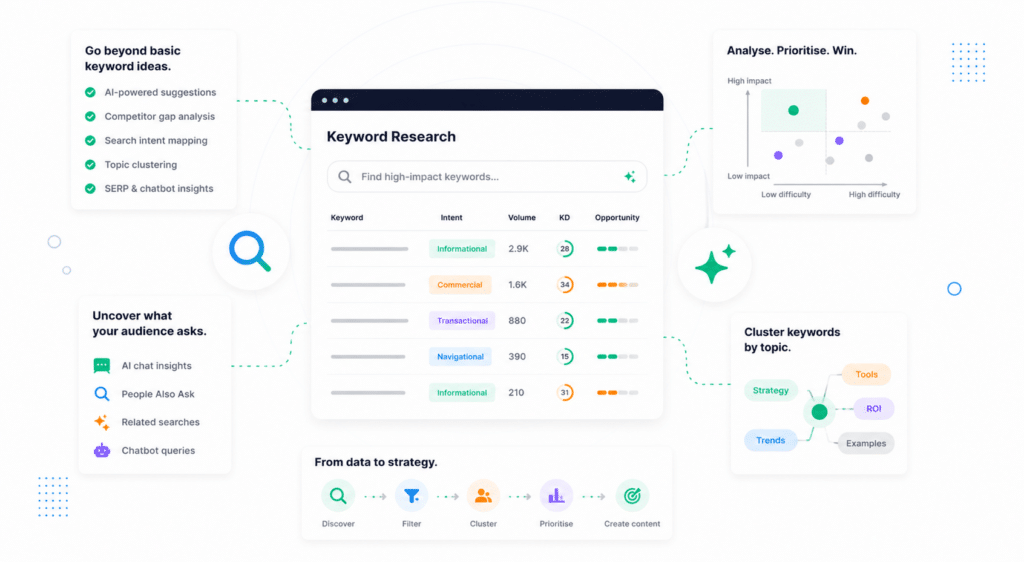
Gone are the days when keyword research meant plugging generic terms into a tool and picking the highest search volumes. In the AI era, B2B marketers must discover the conversational, long-tail phrases that align with how actual people—and chatbots—discuss problems, solutions, and brands. This deeper layer of keyword research can reveal untapped opportunities to connect with high-intent prospects through AI chat, search engines, and voice assistants.
In this guide, we’ll delve into advanced techniques that go beyond surface-level SEO, ensuring your strategy meets the evolving demands of both sophisticated B2B buyers and AI-driven tools.
1. Start with Topic Modeling Over Simple Keywords
Instead of creating content around a single keyword, build topic clusters. Brainstorm the broad subject, subtopics, and common user questions. This approach helps you produce interconnected content that gives AI chatbots a 360-degree view of your expertise.
If you’re unfamiliar with topic clustering, see our article on ChatGPT Optimized Content Strategy for a practical framework on structuring your site around core pillars.

2. Analyze Conversational Search Data
AI chatbots thrive on natural language. Look at forums, social media groups, and Q&A platforms like Quora or Reddit to see how your target audience phrases their questions. These user-generated queries often mirror the format people use when talking to ChatGPT.
- Reddit & LinkedIn Groups: Observe how peers discuss industry trends. Terms like “best solution for X challenge” can become target phrases.
- Search Console Queries: Google Search Console can reveal question-based queries that already drive traffic to your site.
- Voice Assistant Insights: If available, track voice search data for more casual, human-like queries.
3. Incorporate Intent Analysis
Understanding user intent is vital. B2B buyers might be researching a broad problem (informational intent), comparing products (commercial intent), or ready to purchase (transactional intent). AI chatbots are especially adept at discerning intent. By crafting content aligned with each stage, you can capture prospects earlier and guide them through the funnel.
For example, a query like “How to automate lead nurturing emails?” indicates a user in the awareness or early consideration phase. You might direct them to a guide that eventually recommends your tool. If you need more guidance on tailoring content to each buyer stage, check out our ChatGPT B2B Buyer Journey article.
4. Leverage AI-Powered Keyword Tools
Many SEO platforms now offer AI-driven keyword clustering and gap analysis. These tools analyze vast datasets to identify patterns you might miss through manual methods. Some even simulate ChatGPT-like queries to predict which type of content will best answer user needs.
- Gap Analysis: Compare your content coverage to competitors. Discover areas where you’re missing entire subtopics or question sets.
- Semantic Grouping: Find groups of related keywords that revolve around a topic, making it easier to create cohesive articles and resource hubs.
5. Drill Down into Vertical-Specific Phrases
Generic terms like “CRM software” might have high volume but also stiff competition and vague intent. In B2B marketing, vertical-specific keywords (e.g., “CRM software for property management firms”) can capture a narrower, but more qualified audience.
Use industry publications, case studies, and even competitor sites to see the exact language used for specialized solutions. Integrate these terms into your content, ensuring that ChatGPT can surface your brand when users request niche recommendations.
6. Map Keywords to the Buyer’s Journey
Not all keywords have the same value. The best approach is to categorize them by funnel stage:
- Top-of-Funnel (Awareness): “What is marketing automation?” or “How does a CRM improve lead management?”
- Mid-Funnel (Consideration): “Comparison of top CRM platforms” or “Case studies for AI-driven marketing solutions.”
- Bottom-of-Funnel (Decision): “Pricing for XYZ marketing automation” or “XYZ CRM reviews and testimonials.”
By aligning content with each funnel stage, you can guide AI-driven users seamlessly from learning about your brand to becoming sales-ready leads. If you’re unsure how to structure content for maximum AI impact, explore Optimizing Content for ChatGPT.
7. Measure and Iterate
Once you implement advanced keyword research, track how your updated content performs. Look at organic traffic, time on page, and conversion metrics—especially from pages optimized for conversational or vertical-specific queries.
Remember, AI-driven search and user behavior change over time. Keep auditing your keyword sets, adjusting for industry shifts, and looking for new opportunities as language models evolve. For a broader look at how to tie these efforts to ROI, see Measuring ChatGPT Marketing ROI.
Conclusion
Advanced keyword research in the AI era calls for a more nuanced approach. Instead of focusing solely on high-volume terms, successful B2B marketers zero in on conversational queries, specialized niches, and the underlying intent behind each search. By analyzing real user language and employing AI-driven tools, you gain a deeper understanding of what your audience wants—and how they ask for it.
These insights help you build content clusters that ChatGPT and other AI models can readily reference, drawing in more targeted, high-intent traffic. Ultimately, this holistic approach to keyword research not only improves your rankings but also positions your brand as a trusted advisor in the eyes of both buyers and the AI systems that guide them.
Reach Your Revenue Goals. Grow MRR with Gripped.
Discover how Gripped can help drive more trial sign-ups, secure quality demos with decision makers and maximise your marketing budget.
Here's what you'll get:
- Helpful advice and guidance
- No sales pitches or nonsense
- No obligations or commitments




Book your free digital marketing review
 30 min session
Other Articles you maybe interested in

Best GEO Tools for B2B SaaS
Discover the best GEO tools for B2B SaaS that track AI visibility and brand mentions across LLMs to help you control how models describe your company online.

How Much Does GEO Cost? A B2B SaaS Pricing Guide
Discover how much GEO costs in this B2B SaaS pricing guide, featuring expert breakdowns of agency rates and monthly budgets for companies with £2M-£20M ARR.

Structured Data for AI Search: A Schema Guide for B2B SaaS
Master this structured data for AI search with a schema guide for B2B SaaS teams to improve visibility in tools like ChatGPT and boost site credibility.