
How to Create the Perfect Value Proposition


For founders, it is obvious why their product will change the world. However, sometimes people need some convincing, especially if your product is ahead of the curve or your product disrupts well established incumbent behaviours. You’ll need to ensure you can explain to prospects the value of your product in a clear and simple way. This doesn’t have to be hard. You have probably included your value proposition in your elevator pitch. This can become the foundation of your sales process.
Once you’ve articulated your message in a clear and consistent way that you can explain to others, go one step further and develop ‘unique value propositions’. These are tailored value propositions that speak to individual segments within your target market audience. Divide your customers by buyer personas, markets, industry etc. Then think about specific messages that address their unique pain points, knowledge base and characteristics. In this article we map out the best routes to building the perfect value proposition. We’ll cover:
- The five most important elements of the perfect value proposition
- Using product market fit and personas
- Studying the competitive environment
- Finding or creating a niche
- And, finally selling a methodology not a product
An introduction to…
The five most important elements of creating the perfect value proposition
Be clear.
Creating unique and detailed value propositions is great, but make sure you keep it simple. Too much detail might make prospects lose focus.
Be specific.
Broad claims are not very compelling. Generic statements that you can increase efficiency or decrease time wasted are nowhere as gripping as specific statistics. Stating that you can increase efficiency by 30% or cut time wasted in half will be much more effective. Simply make sure that you can back up those claims.
Be an expert.
Show that you understand the industry you are selling to and how your product sits within this industry. Your value proposition can be informed by the changing landscape of that industry, the disruptors that have emerged, etc.
Article continues below.

Be focused.
Focus on what matters most to the customer. Speaking directly to their needs will elicit the best response. You need to pick your strongest selling points for any given persona and put those front and centre. You will have time later to get bogged down in the details. Especially focus on underserved or unresolved pain points.
Be targeted.
If you try to appeal to everyone, you will end up appealing to no one. Sometimes the person you are selling to, who holds the buying power within an organisation, doesn’t experience the pain you are solving directly. This will change the way they relate to your product and should be reflected in your marketing and sales efforts. Instead of focusing on specific pain points, you should focus on how your product benefits the company process overall.
Step 1:
Define your value proposition, buyer personas and PMF (Product Market Fit)
Getting specific about your value proposition and then successfully moving into sales requires research. Research your targets. Define your ideal customer and the companies which are best fit for your product. It is important to write this down and for it to be clear. While your team may be small today, you need to be able to share your thinking with others. As your business grows, there will be lots of debate over what features should be added or how your product should behave. It is useful to be able to refer back to what problem this product is supposed to solve in the first place. This will help you avoid going off in tangents and remain focused on what you’re trying to do.
A helpful way of realising product market fit is imagining that you are hiring a person, rather than your product, and thinking about what the job description would look like. Writing a job spec for what your product does is a really good way of bringing your product to life. Think about what your product will do for someone.
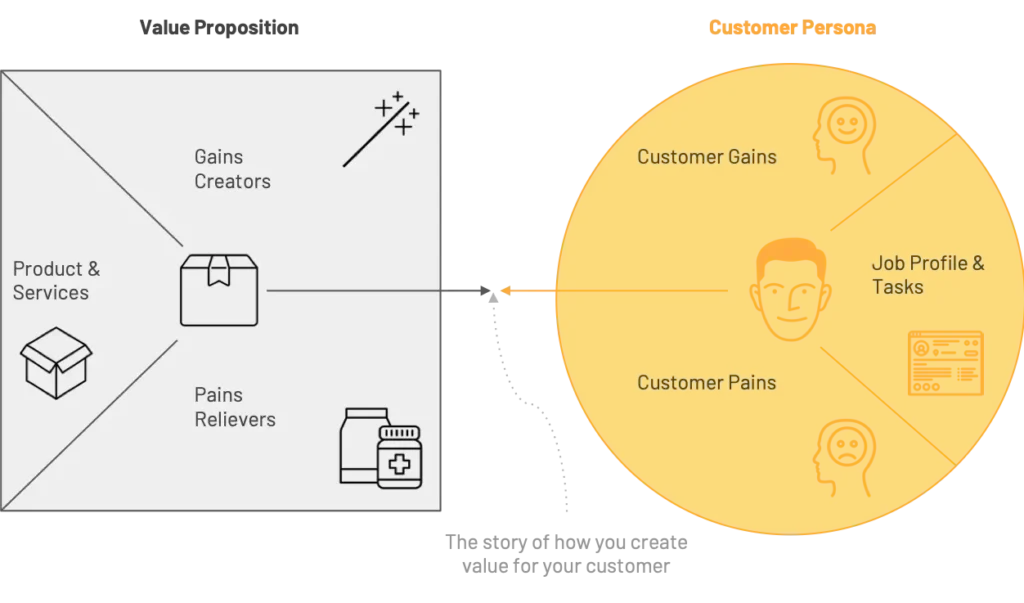
Finding the right B2B SaaS customer is about being disciplined in how you look at the market. You need to identify the group(s) of people who have a problem that your product solves, and then recognise that, of those people, only a subset will want to solve that problem in the way that your product does. Those people are your ideal customers, and are likely to both convert and remain customers with little effort on your part once you can get compelling messaging in front of them.
Step 2:
Study the competitive terrain
Lots of founders in the early stages of their business will tell you that there are no competitors to their product. This is often misguided and poorly prepares founders for selling their product and makes it difficult to differentiate themselves.
There is always a competitor. Sometimes competitors offer a completely alternative solution. But, it is important to be aware of them so you understand where you fit in the market. If you don’t understand the competitive terrain, then you’re setting yourself up to fail. It’s not about using competitors as a benchmark, but being able to articulate why the way you approach things is better or different.
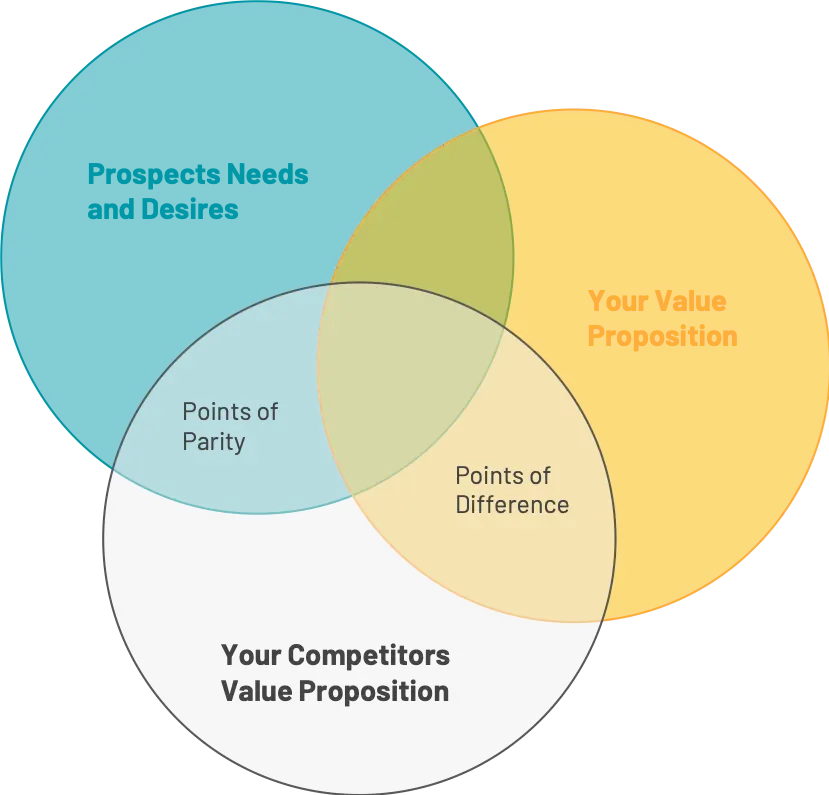
Better is much more appealing than different to another product. But, fundamentally, if competitors take you by surprise, you will be underprepared to explain why you are the better choice. It is also an indication that you are underprepared in other elements of your planning and research.
Step 3:
Study the market at large
In addition to the competitive terrain, founders should research and understand the market in general. If you’ve got a product that is aimed at a particular vertical, for example, then you shouldn’t class yourself as simply a SaaS business. You should think of your business as part of that vertical. Embedding yourself within that vertical is critical to prospects within that vertical taking you seriously.

In vertical markets, key people know each other. They may change jobs, but they remain in the same market and have a really clear understanding of the businesses and business model. Matching this level of in-depth expertise is your route to establishing yourself as a genuine centrepiece of that vertical market. Without that complementary understanding of the market’s unique pain points, business models and customers, you will struggle to embed yourself and convince prospects that your product can actually match their needs.

Step 4:
Find or create a niche
Aside from exceptions like Salesforce and HubSpot, B2B SaaS businesses need to find a niche.
That niche, normally, would be defined as a vertical market. If it’s not a vertical market, or you can’t define a vertical market, then you should make up your own niche.
This could be as simple as businesses that operate a service or subscription model. That is a niche, despite businesses within that niche probably offering very different services or products. All businesses with subscription models are likely to have similar core functions and characteristics, regardless of what they deliver.
Once you have defined your niche, you can increase your businesses relevancy by incorporating things that are important to those types of businesses. For example, if your product helps businesses communicate with customers, you will deliver additional and relevant value by making sure subscription businesses are easily able to assign attribution categories to subscribers and track churn rates.
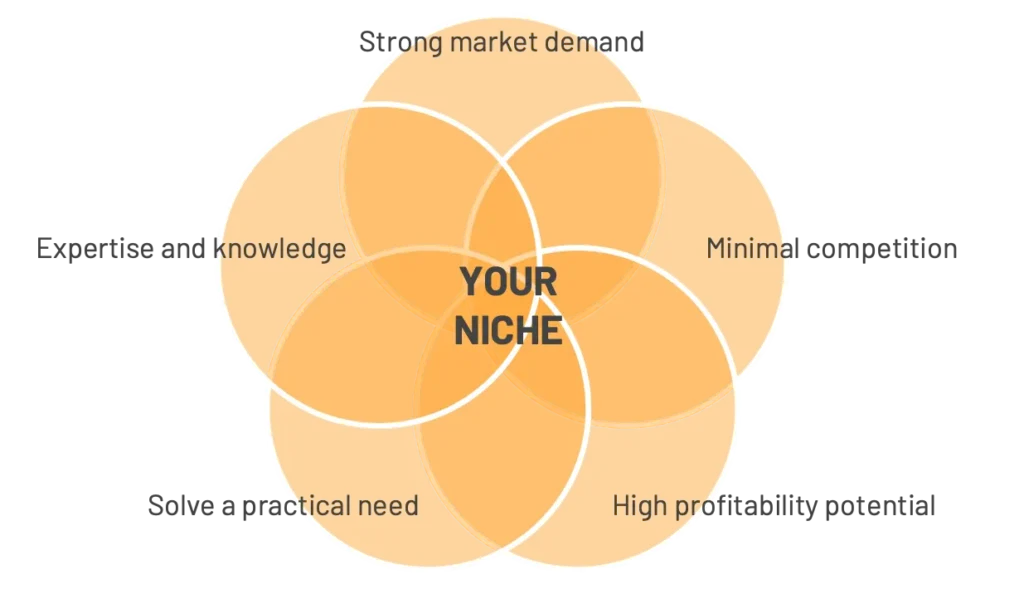
Having a niche will allow you to think more clearly about your ‘product use cases’ and sidestep competition by developing the most valuable product for your target market audience.
Step 5:
Sell a methodology, not a product
All of the fast-growing B2B products (Salesforce, HubSpot, GitHub, DataBox, Slack, SurveyMonkey, ZenDesk etc.) don’t sell a product. They sell a methodology. Their focus is on the function or process that their product supports, not the product itself. Developing a methodology that your product can embody is key to creating a narrative that customers will value.
For example, inbound marketing was a phrase before HubSpot turned it into a methodology. HubSpot sells and markets the methodology, and their product supports you in delivering that methodology. If HubSpot simply sold a product, they would not be such a unique platform. They would find themselves directly competing against far more complex products like Marketo, which has been retrofitted to a methodology. They would simply be selling a thing, rather than a process, operation and (most importantly!) a solution.

This differentiates them in the market. It also takes away the expectation that what they sell will decrease in price, year on year. Products get cheaper, methodologies retain their value. Instead, HubSpot is a way of achieving inbound marketing; they are one and the same thing. That kind of transcendent value is gold when it comes to go-to-market strategies.
There are companies out there with a problem that you are trying to solve. Software is one part of it, people and processes are the other part of it. Address these things. If you can address all three, you’re on to a winner. If you ignore any of them, it will take you a long time to establish a position. Whenever possible, try to frame your solution as a methodology rather than simply a product.
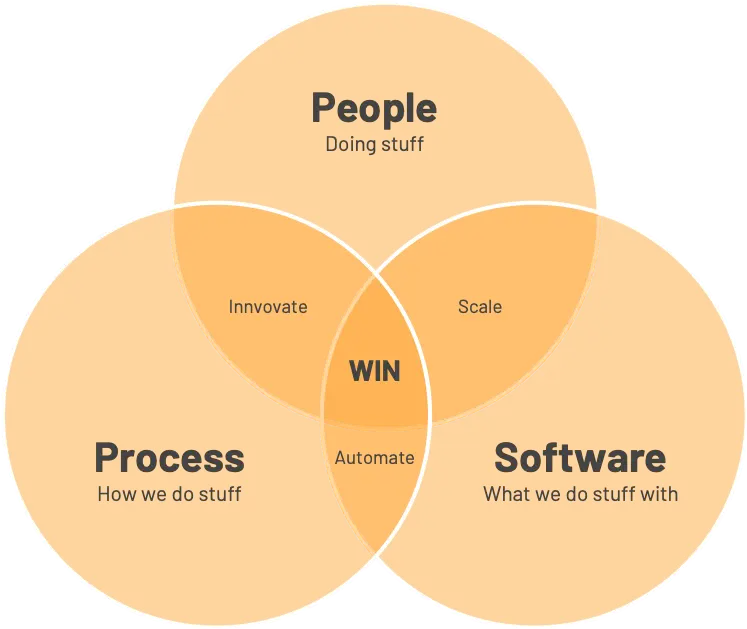
To do this effectively, you will also need a plan for helping customers execute that methodology. Many customers buy software believing that it will solve all of their problems as simply as snapping their fingers. In truth, meaningful results rely on implementing that software solution in the right way — adopting the methodology that the software supports. Often, this requires assistance.
Successful SaaS businesses either deliver this necessary support through in-house teams or professional service partners who will help their customers adopt the process and strategic changes required to get the results promised by your product. You need to pick which strategy best matches your business and market.
If you’ve gone through the process of creating your own value proposition we’d love to hear your thoughts and experiences – please leave a comment below.
Reach Your Revenue Goals. Grow MRR with Gripped.
Discover how Gripped can help drive more trial sign-ups, secure quality demos with decision makers and maximise your marketing budget.
Here's what you'll get:
- Helpful advice and guidance
- No sales pitches or nonsense
- No obligations or commitments





Book your free digital marketing review
 30 min session
Other Articles you maybe interested in

B2B Demand Generation: Should You Adopt This Strategy in 2025?
Discover the essential tactics and strategies for B2B demand generation in this comprehensive guide.

A Guide to the Top 10 Marketing Agencies for B2B SaaS Companies: A Comprehensive Comparison Guide
The B2B SaaS landscape is booming—and it’s never been more challenging to break through the noise. Between new entrants, accelerating product cycles, and sky-high expectations from digitally savvy buyers, marketing your SaaS offering effectively requires a nuanced, tech-first approach. That’s where specialised marketing agencies for B2B SaaS companies come in. Unlike generalist agencies, these specialised…

The 10 Best Full Service Digital Marketing Agencies Updated for 2025 (UK List)
Navigating the digital marketing landscape has never been more complex—especially if you’re a B2B tech or SaaS company aiming to stand out in an increasingly crowded space. Between SEO, content marketing, paid campaigns, CRO, marketing automation, and social media engagement, the sheer volume of channels can be overwhelming. That’s where a full-service digital marketing agency…